



For fans of the Backstreet Boys, Brian Littrell’s voice has always been one of the most recognizable. His warm tone and soulful delivery made him a core part of the group’s sound for decades. But in recent years, many fans have noticed changes. Some say Brian Littrell’s voice is getting worse, sparking conversations, debates, and concerns across the music world.
- Who is Brian Littrell?
- Brian Littrell’s Voice: Then vs. Now
- Health Challenges and Vocal Struggles
- What Fans Have Noticed
- How Brian Littrell Manages His Voice
- Is Brian Littrell’s Voice Really Getting Worse?
- Comparisons to Other Artists
- The Emotional Impact on Fans
- What the Future Holds
- Frequently Asked Questions
- 1. Why does Brian Littrell’s voice sound different now?
- 2. Does Brian still sing with the Backstreet Boys?
- 3. Can vocal dysphonia be cured?
- 4. How old is Brian Littrell?
- 5. Has his health affected his voice?
- 6. How do fans feel about Brian’s current voice?
- 7. Will Brian stop performing?
- 8. Which songs are hardest for Brian now?
- 9. Has Brian spoken about his vocal issues publicly?
- 10. What is Brian Littrell’s musical legacy?
- Conclusion
Is it age? Health issues? Or simply the natural progression of a long singing career? In this article, we’ll take a deep dive into Brian’s vocal journey, explore the struggles he’s faced, and understand what this means for his career and fans.
Who is Brian Littrell?
Early Life and Background
Brian Littrell was born on February 20, 1975, in Lexington, Kentucky. From a young age, music was central to his life. He grew up singing in church and developed a strong passion for gospel and pop.
Joining the Backstreet Boys
In 1993, Brian became a member of the Backstreet Boys, one of the most successful boy bands in history. With over 100 million albums sold, the group defined the late 1990s pop era. Brian’s smooth tenor voice became a signature element of their harmonies.
Solo Career
In addition to his work with the Backstreet Boys, Brian pursued a solo career, particularly in gospel music, releasing his solo album “Welcome Home” in 2006. His ability to balance pop and spiritual themes highlighted his vocal versatility.
Brian Littrell’s Voice: Then vs. Now
Early Career Vocals
In the 90s and early 2000s, Brian’s voice was known for:
- Clear tenor range
- Smooth falsettos
- Emotional depth in ballads
- Ability to carry harmonies seamlessly
Recent Performances
Fans have pointed out that in recent tours and shows, Brian’s voice sometimes sounds:
- Hoarse or strained
- Lower in range than before
- Less controlled during high notes
- Breathier in tone
This contrast has raised concerns about whether Brian Littrell’s voice is declining with time.
Health Challenges and Vocal Struggles
Vocal Tension Dysphonia
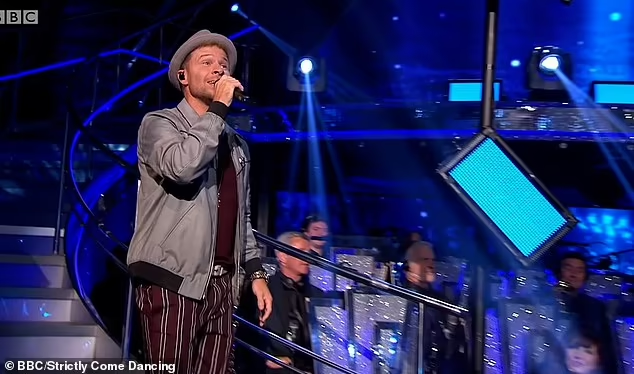
Brian revealed that he suffers from vocal tension dysphonia, a condition where the muscles around the vocal cords tighten, making singing difficult. This condition affects pitch, tone, and stamina.
Past Heart Surgery
Brian underwent open-heart surgery in 1998 due to a congenital heart defect. While not directly connected to his vocal cords, health issues have always been part of his journey, and they may impact his physical performance.
Aging and Vocal Wear
Like many singers who perform for decades, natural aging also changes the vocal cords. Loss of elasticity, reduced stamina, and shifts in range are normal after years of professional singing.
What Fans Have Noticed
Live Concert Feedback
Fans attending Backstreet Boys’ DNA Tour mentioned noticeable differences in Brian’s vocals. Some felt he avoided high notes, while others said his voice cracked under strain.
Online Discussions
Platforms like Reddit, Twitter, and fan forums often have threads discussing his voice. While some express sadness, many fans remain supportive, understanding the challenges he faces.
Comparison with Other Members
Compared to bandmates like AJ McLean or Nick Carter, who still hit high notes with power, Brian’s current voice stands out as softer and less consistent.
How Brian Littrell Manages His Voice
Vocal Therapy
Brian has openly shared that he works with vocal therapists and coaches to manage his condition. Therapy focuses on reducing tension, improving breath control, and strengthening vocal endurance.
Adjusted Performances
In concerts, Brian sometimes adapts his singing style, lowering notes or harmonizing differently to protect his voice.
Support from Bandmates
The Backstreet Boys often adjust their arrangements to help Brian shine without straining. Their teamwork highlights the bond within the group.
Is Brian Littrell’s Voice Really Getting Worse?
The answer depends on perspective.
- Yes, compared to the 90s: His voice has clearly changed, losing some of its original power and clarity.
- No, in terms of artistry: Brian continues to deliver heartfelt performances with emotional depth, even if his technical range has shifted.
It’s less about “getting worse” and more about adapting to new realities.
Comparisons to Other Artists
Many legendary singers have faced similar challenges:
- Adele struggled with vocal cord issues but returned after surgery.
- Steven Tyler and Jon Bon Jovi faced changes due to age and strain.
- Celine Dion also experienced vocal challenges later in her career.
Brian’s story is part of a broader truth: even the greatest voices evolve.
The Emotional Impact on Fans
Nostalgia and Memory
Fans who grew up with the Backstreet Boys often associate Brian’s voice with their childhood. Changes in his singing can feel like the passage of time itself.
Compassion and Support
Many fans express empathy, praising Brian’s courage to keep performing despite difficulties. They admire his honesty in discussing vocal dysphonia.
Disappointment and Debate
Some fans admit feeling disappointed when live performances don’t match studio recordings, sparking debates about whether Brian should step back from certain songs.
What the Future Holds
Continuing with Backstreet Boys
The Backstreet Boys show no signs of stopping. With new albums, tours, and residencies, Brian remains committed to performing.
Possible Solo Projects
Brian could return to gospel or acoustic projects where his current voice fits naturally. His focus may shift toward intimate performances over power-heavy pop.
Legacy Beyond Vocals
Even if his singing changes further, Brian’s legacy is secure. His decades of music, dedication to fans, and role in one of the greatest boy bands will always stand strong.
Frequently Asked Questions
1. Why does Brian Littrell’s voice sound different now?
He suffers from vocal tension dysphonia and natural aging, both of which affect his voice.
2. Does Brian still sing with the Backstreet Boys?
Yes, he remains an active member and performs at concerts and tours.
3. Can vocal dysphonia be cured?
It can be managed with therapy but is not always permanently curable.
4. How old is Brian Littrell?
He was born in 1975, making him 50 years old in 2025.
5. Has his health affected his voice?
Yes, past surgeries and vocal conditions have contributed to changes in his singing.
6. How do fans feel about Brian’s current voice?
Fans are mixed—some express concern, while many remain supportive and loyal.
7. Will Brian stop performing?
There are no signs of retirement, though he may adjust how he sings.
8. Which songs are hardest for Brian now?
High-energy pop tracks and songs with high notes are more challenging.
9. Has Brian spoken about his vocal issues publicly?
Yes, he has openly discussed vocal tension dysphonia in interviews.
10. What is Brian Littrell’s musical legacy?
He will always be remembered as a core voice of the Backstreet Boys and a successful gospel artist.
Conclusion
The question of Brian Littrell’s voice getting worse is complicated. His vocals have undeniably changed from the smooth, powerful tenor of the 90s, but his artistry and passion remain. Through vocal therapy, support from fans, and sheer determination, Brian continues to perform and inspire. Instead of seeing his journey as decline, it’s more meaningful to see it as evolution. His voice tells a story—not just of notes and melodies, but of resilience, struggle, and the unbreakable connection between artist and audience.